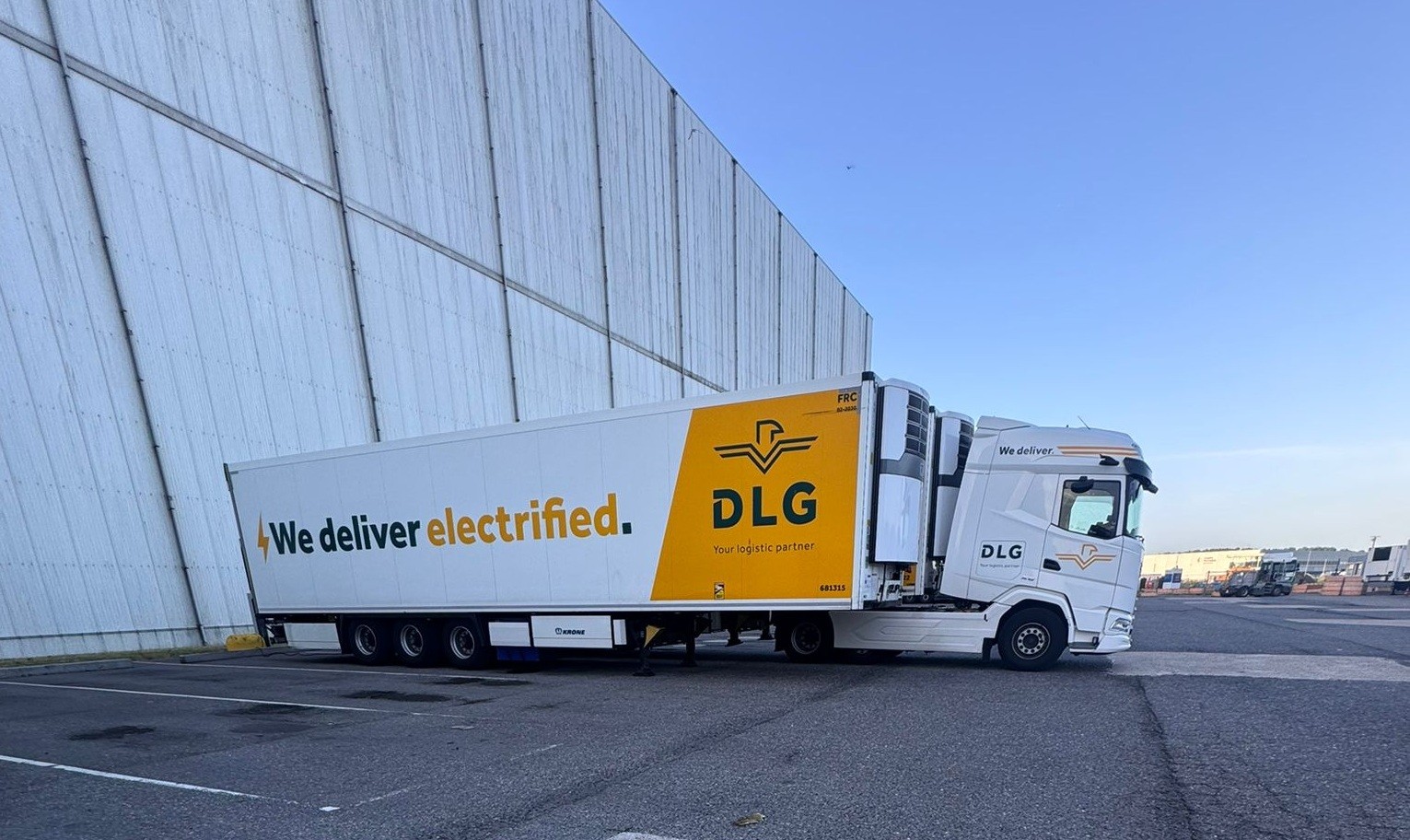
One of our team members recently hit the road again, accompanying a DLG driver on their route. The TRU reefer was powered by our diesel-free advantage.li system.
Why are we choosing to ride along? Because we’re always learning — and always looking for ways to better support our customers in the real world.
This test gave us valuable insight into battery behaviour under everyday conditions.
Over a few hours, the battery dropped from 97% to 61% — a 36% decrease.
Here’s what stood out:
• At a long stop in Waalwijk, 32 pallets were offloaded. With the doors open and the thermal partition (‘schot’) not in use, the internal temperature rose from -23°C to -6°C — a change observed in an unloaded container, before any goods were on board.
• Our advantage.li unit performed exactly as it should to bring the temperature back to set point — but had to work harder due to operational choices. (As a reference point, it’s similar to how an empty fridge takes longer to cool down than one that’s full of food).
But here’s the thing: in a diesel TRU, that same recovery would likely have used 1.5 to 2 litres of diesel, adding unnecessary fuel cost, emissions, and noise.
Whether battery or diesel, recovery from temperature loss comes at a cost. The difference? Our system does it quietly, cleanly, and far more efficiently, especially when paired with smart driving habits.
So what can you do to get the most out of your advantage.li unit?
• Use thermal partitions whenever possible
• Minimise door-open time
• Run in start-stop mode while driving, continuous while charging
• Monitor high-usage scenarios with real-time telematics
Getting on the road with our customers helps us do what we do best: combine great technology with operational best practice for maximum efficiency and savings. We’re proud to partner with DLG— a logistics provider that puts innovation and digitalisation at the heart of its operations. Together, we’re taking another step toward a smarter, cleaner world.
This test drive reinforces what we’ve seen again and again:
Better habits = better range.
Better data = better decisions.